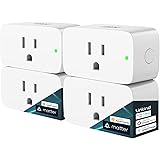
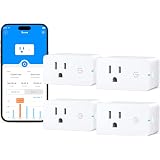
Optimizing home energy consumption presents a significant challenge for many prosumers utilizing solar power systems. Maximizing the self-consumption of generated electricity, thereby minimizing reliance on the grid and reducing utility costs, is a primary goal. The Anker Solix ecosystem offers robust solutions, and this article, building upon the insights from the accompanying video, delves deeper into how Anker Smart Plugs serve as an invaluable tool for precise energy management.
Specifically designed to integrate seamlessly with the Anker Solix 2, these smart devices facilitate a near zero-feed-in (Nulleinspeisung) strategy. While a Smart Meter offers comprehensive household consumption monitoring, Anker Smart Plugs provide a flexible and effective alternative, especially when physical constraints or network limitations preclude a full Smart Meter installation. Consequently, understanding their function and strategic deployment is crucial for enhancing your home’s energy efficiency profile.
Anker Smart Plugs: Enhancing Your Anker Solix Energy Management System
The core utility of Anker Smart Plugs lies in their ability to monitor and control individual appliances, thereby granting granular insights into specific power consumption. Unlike a central Smart Meter, which registers total household load, these plugs offer localized data. This targeted approach allows homeowners to make informed decisions about when and how high-demand devices operate, aligning usage with periods of peak solar generation.
Furthermore, these plugs become instrumental in reducing grid reliance. By intelligently shifting the operation of certain appliances, such as washing machines or dishwashers, to times when your Anker Solix system is producing abundant energy, you effectively increase your self-consumption rate. This proactive demand-side management minimizes expensive electricity purchases from the grid.
Smart Plugs vs. Smart Meters: A Strategic Deployment Comparison
The decision between implementing a full Smart Meter or strategically deploying Anker Smart Plugs within your Anker Solix system hinges on several practical considerations. A Smart Meter, typically installed within the main electrical panel, provides an overarching view of all energy flows, making it the most accurate method for achieving a true Nulleinspeisung by monitoring every single consumption point across the entire household infrastructure.
In contrast, Anker Smart Plugs offer a decentralized solution, perfect for scenarios where a Smart Meter installation is impractical. Imagine if your meter cabinet lacks the physical space for additional components, or perhaps the Wi-Fi signal struggles to reach the basement where the main panel resides. In such instances, smart plugs elegantly bypass these obstacles, providing localized measurement and control capabilities precisely where needed. While they may not capture every minor consumption point, they significantly contribute to optimizing the major energy draws, effectively achieving a “near” zero-feed-in state.
Optimizing Home Energy Self-Consumption with Anker Smart Plugs
Achieving optimal energy self-consumption with your Anker Solix system involves distinguishing between your “base load” and “variable loads.” Your base load comprises constant, low-level power draws from essential devices like refrigerators, routers, and standby appliances. The Anker Solix system can be programmed to automatically cover this consistent baseline consumption from stored solar energy.
However, variable loads, such as high-power appliances that operate intermittently, present the greatest opportunity for optimization using Anker Smart Plugs. Think about devices like washing machines, tumble dryers, ovens, dishwashers, or even high-wattage televisions. These are ideal candidates for smart plug integration. By connecting these significant energy consumers via a smart plug, you gain the ability to monitor their real-time consumption and, crucially, to schedule their operation to coincide with your solar energy generation peaks.
Technical Specifications and Integration Capabilities
The Anker Smart Plugs are engineered for robustness and broad compatibility within a typical household environment. Each smart plug boasts a maximum measurement capacity of 2500 Watts, which is more than sufficient for the vast majority of standard household appliances. This capability ensures reliable monitoring and control, whether you are managing a powerful oven or a demanding washing machine.
Furthermore, the Anker Solix ecosystem supports the integration of up to six individual Smart Plugs. This capacity allows users to selectively target the most energy-intensive or strategically important appliances within their home. Consequently, you can establish a focused approach to energy monitoring and automation, rather than needing to equip every single socket with a smart device.
Step-by-Step Integration with the Anker App
Integrating an Anker Smart Plug into your existing Anker Solix system is a straightforward process managed entirely through the intuitive Anker app. This ensures that even users new to smart home technology can quickly harness the benefits of enhanced energy management.
Initially, physically connect your chosen appliance to the smart plug, then insert the smart plug into a standard wall socket. Subsequently, open the Anker app, locate the “+” symbol in the top right corner, and select “Add Device.” The app will automatically detect nearby Anker Smart Plugs, simplifying the discovery phase. You will then be prompted to select your Wi-Fi network and enter the password, establishing the necessary network connection for communication. It is common for new devices to require a firmware update upon initial setup, which the app will guide you through seamlessly. Once updated, you can proceed to create a charging and discharging plan, categorize the smart plug (e.g., “Living Room”), and select the “Intelligent Plug Mode” within your Anker Solix home system configuration. This systematic approach ensures accurate integration and optimized functionality.
Real-World Application and Data-Driven Energy Monitoring
Once integrated, Anker Smart Plugs immediately begin transmitting valuable power consumption data directly to your Anker app. This real-time feedback empowers you to understand precisely how much energy specific devices are consuming. For instance, the video highlighted a basic air purifier consuming merely 28 Watts, illustrating that some devices are surprisingly efficient.
In contrast, connecting a high-wattage heater clearly demonstrates how a smart plug provides critical insights into substantial energy draws. Observing such values directly within the app confirms the significant impact these appliances have on your overall electricity bills and energy self-sufficiency goals. When multiple Anker Smart Plugs are deployed, the app provides a consolidated view, allowing you to monitor the individual consumption of each connected device, fostering data-driven decisions for further optimization.
Anker Smart Plugs: Deine Fragen, unsere smarten Antworten
What are Anker Smart Plugs used for?
Anker Smart Plugs are used to monitor and control individual appliances, helping you manage and optimize your home’s energy consumption, especially with an Anker Solix solar system.
How do Anker Smart Plugs help save energy?
They allow you to see how much electricity specific devices use and schedule them to run when your home solar system is generating the most power. This helps you use more of your own solar energy and reduce reliance on grid electricity.
Can I use Anker Smart Plugs instead of a Smart Meter?
Anker Smart Plugs offer a flexible alternative, especially when a full Smart Meter installation is difficult due to physical or network limitations. They provide localized monitoring and control for key appliances.
What kind of home appliances should I connect to an Anker Smart Plug?
They are best used with high-power appliances that operate intermittently, like washing machines, dishwashers, ovens, or large TVs, to optimize their usage with your solar energy.