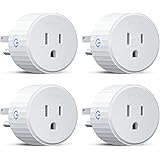
Unlock Your Smart Home’s Full Potential: The Power of Reliable Smart Plugs
The frustration of smart devices that fail to connect, lag inexplicably, or simply stop responding is a common complaint among those embracing home automation. It is widely acknowledged that a smart plug should offer seamless convenience, not introduce new headaches. As expertly highlighted in the video above, selecting the right smart plug from the multitude of options available can significantly impact your daily experience. This guide aims to expand upon the video’s insights, providing a detailed overview of what truly constitutes a superior smart plug and why specific models stand out in today’s market.Understanding the Core Benefits of Smart Plugs
Smart plugs, at their essence, transform ordinary appliances into smart devices, offering remote control, scheduling capabilities, and often voice activation. This transformation is not merely about convenience; rather, it extends to tangible advantages such as energy conservation, enhanced home security, and greater control over your living environment. For instance, the ability to remotely power off forgotten appliances can prevent unnecessary energy consumption, a direct benefit often sought by homeowners. Furthermore, automated lighting schedules, easily managed through a smart plug, can deter potential intruders by creating the illusion of occupancy, thereby contributing to peace of mind.Key Features to Consider When Selecting a Smart Plug
When embarking on the journey to integrate smart plugs into your home, several critical features should be meticulously evaluated to ensure an optimal selection. Reliability is paramount; a smart plug must consistently perform its intended function without frequent disconnections or unresponsive behavior. The frustration associated with troubleshooting unreliable devices is often cited as a major deterrent to smart home adoption. Consequently, products known for their stable Wi-Fi connectivity and robust build quality are often prioritized. Moreover, compatibility with existing smart home ecosystems is another non-negotiable factor. Whether your home is powered by Alexa, Google Assistant, or Apple HomeKit, the chosen smart plug should integrate seamlessly, allowing for unified control and simplified routine creation. The advent of universal standards, such as Matter, is beginning to alleviate some of these compatibility concerns, as will be discussed further. Additionally, features like energy monitoring are increasingly being appreciated for their capacity to track power consumption, offering insights that can lead to significant cost savings. The compact design of a smart plug is also a practical consideration, as it determines whether adjacent outlets become blocked.Seamless Integration with Your Smart Home Ecosystem
The ecosystem within which a smart plug operates is a critical determinant of its overall user experience. For those deeply entrenched in Amazon’s smart home environment, the Amazon Smart Plug emerges as a highly practical choice. This device is renowned for its effortless integration, requiring no additional hubs or complex third-party applications. Instead, setup is streamlined directly through the Alexa app, allowing for immediate voice control over lamps, fans, or even coffee makers. The benefit here is a truly plug-and-play experience, significantly reducing the initial setup friction often associated with smart devices. Similarly, individuals who primarily utilize the Google ecosystem are often well-served by the Wyze Plug. This smart plug is engineered for smooth operation with Google Assistant, facilitating fast and reliable voice commands. A particularly noteworthy feature for Google users is its “vacation mode,” which intelligently cycles connected lights or appliances to simulate an occupied home, thereby enhancing security when residents are away. Such dedicated integrations ensure that devices not only work but also enhance the overall utility and interconnectedness of one’s smart home.The Promise of Matter Compatibility for Future-Proofing
The landscape of smart home technology is continually evolving, with Matter protocol representing a significant leap forward in device interoperability. This new universal standard is specifically designed to eliminate the historical barriers that have prevented devices from different manufacturers from communicating effectively. The AiDot Linkind Matter Smart Plug is an exemplary device that fully embraces this new technology. With Matter support, a smart plug can be easily integrated across various platforms, including Apple Home, Alexa, Google Home, and SmartThings, thereby simplifying the user experience and reducing app clutter. Furthermore, Matter-compatible devices frequently offer enhanced reliability because they are often designed to operate locally within your home network, rather than solely relying on cloud services. This local operation means that automations and basic controls can continue to function even if your internet connection experiences an outage. The TP-Link Kasa Smart Wi-Fi Plug Slim, hailed as a leading overall choice, also boasts full Matter compatibility, underscoring its commitment to future-proof functionality and widespread integration. This ensures a stable and responsive smart home environment, irrespective of external network conditions.Maximizing Convenience with Advanced Smart Plug Features
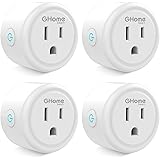
Beyond basic on/off control, modern smart plugs are equipped with a range of advanced features designed to elevate convenience and efficiency. Energy monitoring, as exemplified by the TP-Link Kasa Smart Wi-Fi Plug Slim, stands out as a particularly valuable function. This capability allows users to track the real-time power consumption of connected appliances, providing invaluable data that can inform decisions about reducing energy waste. Identifying “vampire devices” that draw power even when turned off can lead to substantial savings on electricity bills over time. Another practical innovation is the dual-outlet smart plug, such as the HBN Smart Plug. This design effectively doubles your control capacity from a single wall socket, enabling independent management of two separate devices. This is especially useful in areas where outlets are scarce or when multiple appliances, like a lamp and a fan, need independent automation. Additionally, features like geofencing, which automatically trigger actions based on your proximity to home, and robust scheduling tools contribute significantly to an automated lifestyle. The ability to program a coffee maker to start brewing as your alarm rings, or to ensure that heaters switch off when you leave, is made effortlessly possible by these sophisticated features.Plugging Into Your Smart Plug Questions
What is a smart plug?
A smart plug transforms ordinary appliances into smart devices. It allows you to control them remotely, set schedules, and often use voice commands.
Why would I want to use a smart plug?
Smart plugs offer convenience and can help with energy conservation by remotely turning off forgotten appliances. They can also enhance home security by automating lights to simulate occupancy.
What should I look for when buying a smart plug?
When choosing a smart plug, prioritize reliability and compatibility with your existing smart home system like Alexa or Google Home. Features like energy monitoring and a compact design are also beneficial.
What does ‘Matter compatibility’ mean for a smart plug?
Matter is a new universal standard that allows smart devices from different brands to work together easily. A Matter-compatible smart plug can integrate smoothly with various platforms, simplifying your smart home experience.